
The Founder’s Role in PR: Why You Are the Strategy (Not Just the Spokesperson)

You Can’t Outsource Your Voice

Many founders think they can just hire a PR agency, hand over a check, and magically become an industry icon overnight. But here is the hard truth: you cannot outsource your voice. The founder’s role in PR is not just about being a talking head for a company; it is about being the beating heart of the strategy.

Why Founders Are the Story

We talk a lot about getting off autopilot and “disrupting the brain stem.” The media doesn’t care about your shiny product features or your corporate spreadsheets; they care about people. Your unique founding story, your grit, and your real-world journey are what create emotional resonance. In a landscape where everyone is just trying to sell something, a founder’s raw, authentic story is the actual hook. That is the essence of a real thought leadership PR strategy.

Common Founder Mistakes

When founders struggle to get traction, it usually comes down to three main missteps:

  • Disengaged: They expect PR to behave like performance marketing with an immediate ROI without investing the 1 to 5 hours a week required to actually collaborate on the strategy.

  • Over-scripted: They sound like walking, talking press releases. The absolute best PR comes from a natural conversation from the heart. If you sound like a robot, you are giving the media “fake flowers.”

  • Unavailable: We once worked with a client who didn’t respond for weeks. The media moves fast, and when a founder goes dark, it is really hard for the PR team to build the confidence, excitement, and momentum needed for a true partnership. A successful founder’s role in PR demands responsiveness and active participation.
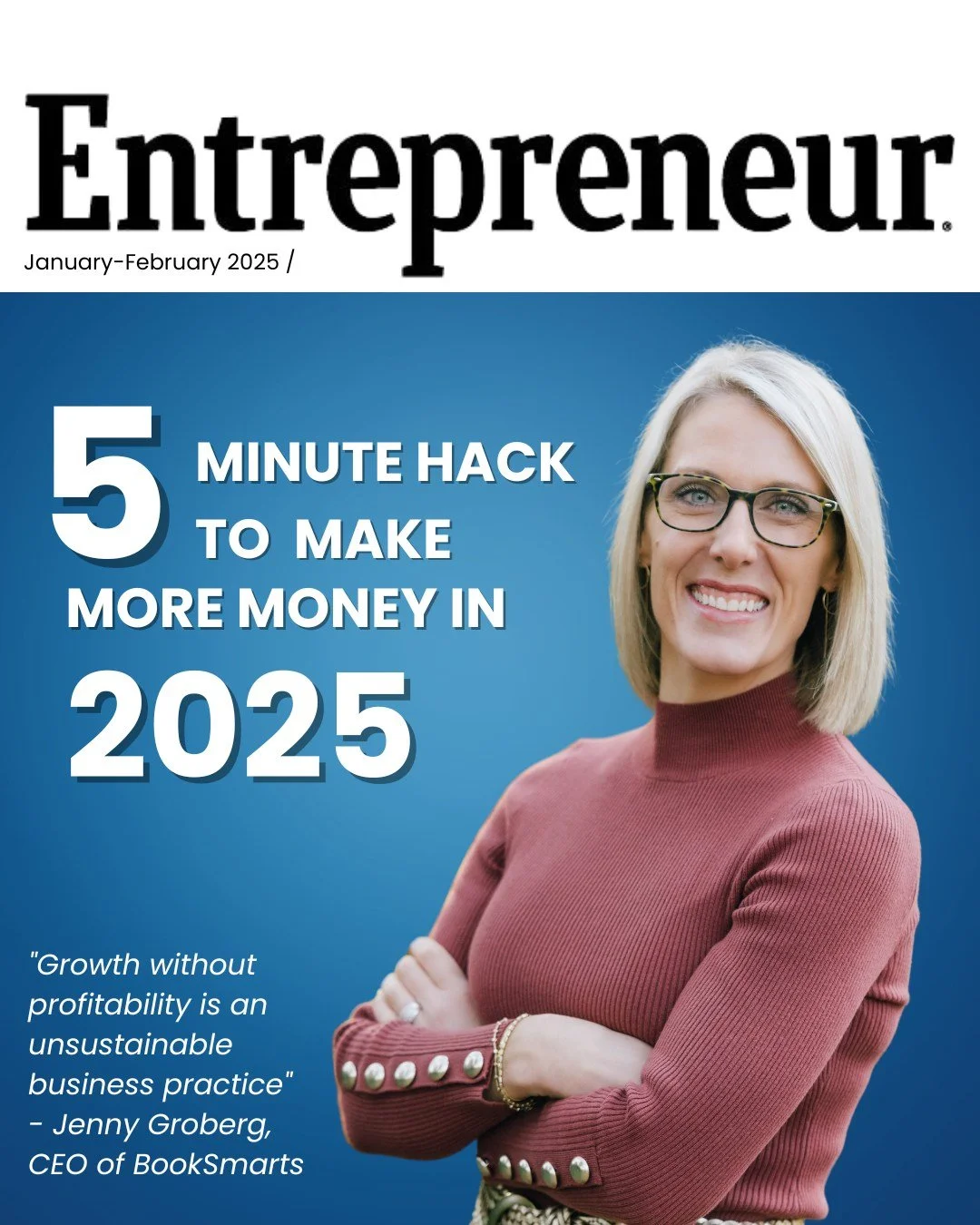
Jenny Groberg in Entrepreneur Magazine because of her participation in thought leadership services.

What Great Founders do Differently

Great founders don’t just sit back and wait for the magic to happen. They are deeply collaborative in the PR process. They bring fresh ideas, they provide substance and additional spokespeople for timely angles, they respond quickly, and they show up to meetings with insights into their culture and strategy that we can actively use for pitching. They embrace a true non-monetary investment and partnership mentality. This active founder’s role in PR is what separates the “okay” campaigns from the phenomenal ones.

How to Show up Effectively

I see this all the time: founders feeling completely inadequate to share their knowledge. This is especially true for women who feel like they don’t have enough knowledge or aren’t the “absolute best” in their field. But here is the reality: just being YOU is different, unique, and important enough.

Sometimes founders hide behind a whiteboard. They want more education, or they desperately want to look perfectly polished before they step in front of a camera. But in fact, the best PR is the most authentic version of you. People will be endeared to you simply because you have unique lived experiences.

On the flip side, a lot of founders are incredibly salesy, but they haven’t had any practice actually taking a stance on a certain issue. This is where CEO media training becomes absolutely critical. CEO media training helps you strip away the sales pitch and lean into your authority. Through rigorous CEO media training, you learn how to articulate your stance confidently so you aren’t just pushing a product, you are leading a conversation.

Service Highlight

Thought Leadership That Actually Moves the Needle

If you are ready to take up space, stop playing small, and act like a “wolf with a crown,” our thought leadership PR services are designed exactly for this. When a founder drops the script and fully commits to their thought leadership PR journey, the business impact isn’t vanity, it’s results.

Look at our partnership with Jenny Groberg, CEO of BookSmarts Accounting and Bookkeeping. We teamed up for a thought leadership campaign featuring aggressive media relations, recurring TV contributorships, and guest speaking.

Because Jenny was willing to step out from behind the whiteboard and take an authentic stance, the company saw a 25% increase in overall revenue, lowered customer acquisition costs (CAC), and over 140 media placements reaching 1.7 billion people (which is the equivalent of $15.73M in ad value) without spending a single ad dollar. All of this led to a 703% organic SEO boost.

On top of that, Jenny was named 2024 CEO of the Year by Utah Business and recognized as an INC. 2024 Female Founder.

That is what happens when you stop handing out fake flowers. If you are ready to do the same, let’s talk.

Why Most Founders Aren’t Ready for PR (And How to Know If You Are)

“PR didn’t fail. You just weren’t ready.”

I hear this all the time, especially when discussing PR for startups. Founders come to me frustrated because their last agency didn’t get them on the Today Show in week one. But here is the hard truth: often, the strategy wasn’t broken. The timing was. If you are asking yourself, “Is my company ready for PR?” you need to understand that PR is not a magic wand for a broken foundation, and it requires real participation from the founder.

The Biggest Misconception About PR Timing

The biggest misconception people have about when to hire a PR agency is thinking it will act like performance marketing with an immediate ROI. It won’t. We are not a performance marketing agency; we do legacy marketing. PR is a long-term game. People often think PR is just luck or guaranteed, but it actually requires creativity, data, and active participation from the CEO or founder to build true visibility, credibility, and market positioning.

5 Signs You’re Not Ready

If you are still wondering if this is the right move, especially when looking at PR for startups, here are 5 signs that you need to hold off:

  1. You don’t have the time. If you aren’t willing to spend 1 to 5 hours a week working with the PR team to collaborate on creative ideas and prep for interviews, you aren’t ready.

  2. You are slow to respond. The media moves fast. If you can’t respond to your PR person quickly, you will miss out on a lot of opportunities.

  3. You don’t want to invest. So many founders tell me their big dreams, but when they hear the minimum investment, they ask for a cheaper option or a “scholarship.” You have to invest time, money, and resources to see a real ROI in your business.

  4. You have no vocal advocates. If you don’t have customers who are actually willing to speak to the press about your brand, you aren’t ready to leverage your credibility.

You don’t trust the experts. If you don’t think PR will work or you aren’t willing to let us do our job, the strategy will fail. Honestly, half of our job is just convincing people to see us as the experts and let us work.

5 Signs You Are Ready

On the flip side, how do you know if the answer to “Is my company ready for PR?” is yes?

  1. You want to be the absolute best in your industry.

  2. You want better SEO and a stronger digital footprint.

  3. You are ready to stand out as a true thought leader.

  4. You need the extra capacity of people to help you build and share your mission.

  5. You are actively trying to grow and scale.

What to Do Before Hiring PR

Before deciding exactly when to hire a PR agency, you have to get your head right. You have to get into an abundance mindset. This process requires a lot of vulnerability. Trusting the strategy of PR for startups and scaling your business means you have to commit to a non-monetary investment and a true partnership mentality.

You need to trust the process. Results don’t come quickly or overnight, but the process will change everything. You have to understand the win (even if a targeted, small feature doesn’t look like a New York Times article immediately) and keep an open mind. We hold your vision as purposefully as our own, but you have to be willing to get in the trenches with us.

How XL PR Evaluates Readiness

At XL PR, we don’t take on just anyone. So if you are asking, “Is my company ready for PR?” or trying to figure out when to hire a PR agency, here is what we look for:

We partner with mission-driven, founder-led companies who have a unique founding story and a founder we can work closely with. We look for leaders who have a long-term growth mindset, have hit that $1 million revenue mark, have a desire to be the best, and are ready for a minimum $3,500 to $6,000 monthly starter budget.

If you are responsive, ready to trust the experts, and prepared to take up space, let’s talk.

From Personal Struggle to Front-Page News: A Step-by-Step Guide to Writing Your Own Pitch

Everyone has a story, but not everyone knows how to package it for the media. Whether you are a business owner, a community leader, or an entrepreneur, the difference between silence and a headline often comes down to one thing: The Pitch.

Following a recent coaching session with a close friend—Jerilyn, a permanent jewelry entrepreneur with a powerful story of resilience—we have broken down the exact formula for turning a personal journey into a media-ready narrative.

Here is your step-by-step guide to finding your angle, timing your outreach, and writing a subject line.

Step 1: Own Your Calendar (The “2-Week Rule”)

The first rule of pitching is relevance. Reporters live by the calendar. You need to identify upcoming national days or local events that align with your story.

The Strategy: Look ahead. If you want coverage for a specific holiday, you cannot pitch your message the day before. You need to start pitching two weeks from the relevant date. However, for broadcast, you will want to be prepared for the interview to take place the day before or the day of, as broadcast works last minute. 

Real-World Examples:

  • February: Focus on “Female Sports Week” (linking business resilience to sports/health) or “Valentines Day”.

  • March: Target “International Women’s Day” (March 8th) or “Single Parent Awareness Day” (March 21st).

April: Pivot to “Global Health Awareness Day” (April 7th) to discuss health battles or new beginnings around Easter.

Step 2: The Subject Line Is Everything

Your subject line is the gatekeeper. It must be specific, emotional, and newsworthy. Don’t use vague titles like “Interview Request.” Instead, tell the story in one sentence.

The Formula: [Protagonist] + [Action/Conflict] + [Outcome/Hook]

Jerilyn’s Winning Example:

“Single mom opens jewelry pop-up shop after cancer recovery”

This works because it immediately tells the reporter the stakes: a single mother, a health battle, and a business triumph.


Jerilyn, leaned into her authentic struggle to victory story, which led to inspiring others as well as a significant business impact, clients and awareness.

Step 3: Write the Pitch. Keep It Short and Sweet.

Reporters are busy. A pitch should be roughly 200 words. The structure should be personal but professional.

The Opening: Start by connecting your story to the readers.

“Hi [Name], I thought your readers might be interested in this story for International Women’s Day… I think I’m not alone in my story, and I would love other women here to find hope through some of life’s hardest moments.”

The “Meat”: Briefly explain the conflict and the resolution.

“Summer of 2024, 5 days after I got divorced, I found out that I was diagnosed with breast cancer. Practically overnight I became a single mom… Permanent jewelry was a skill I already had, and I decided to start my own business where I could have flexible work hours.”

Why It Matters: Explain the result. It isn’t just about jewelry; it’s about independence.

“My business has… made me feel like I don’t need to have a boss that I have to impress… It’s helped give me a lot of confidence to believe in myself and know that I’m doing a good job with my boys.”

The Call to Action: End with a specific request and resources.

“Would you be interested in interviewing me for International Women’s Day? … I have photos and videos that you can use, and my schedule is super flexible.”

Step 4: Vary Your Angles

The beauty of a good story is that it can be told in different ways for different outlets. You don’t just have one pitch; you have several angles based on who you are talking to.

  • The Business Angle: For outlets like Utah Business, focus on the “Founder’s Story”—how a single mom built a brick-and-mortar location in Lehi to secure financial independence.

  • The Health Angle: For lifestyle shows like Fresh Living or Good Things Utah, focus on the recovery. Discuss how “wearing your sports on your sleeve” or choosing charms that represent “obstacles or triumphs” can be healing.

The Parenting Angle: For local news segments on Single Parent Awareness Day, discuss the reality of the mentally tough balance of raising boys alone while running a company.


Step 5: Make It Easy for Them

Finally, never make a reporter hunt for information. Include a Google Drive link where you can include images of yourself, your jewelry, and your boys. If you are pitching TV, offer a visual element, such as bringing in product and doing a little demo while sharing the story.

Conclusion

Your story has the power to inspire, but only if it is heard. By aligning your personal journey with the media calendar and crafting a pitch that respects the reporter’s time, you can turn a personal milestone—like celebrating 1-year cancer survivor status—into a headline that helps the average Utahn find hope.