
Here’s a confession: In November 2025, we knew nothing about GEO press releases. Six months later, they were the backbone of our AI visibility strategy for a client watching their traffic fall off of a cliff..
Here’s what happened: Novorésumé came to us in June 2025 with a problem we’d all been watching unfold across industries. Google’s search results were shifting because of AI, and Novorésumé could see their visibility declining in real time. We knew what to do with that. We’d done it many times before. Earned media. Journalist relationships. The traditional PR playbook. So that’s what we executed throughout the summer and fall.
But by late 2025, something became undeniable. Despite our best efforts, the algorithm shifts kept happening. Novorésumé’s traffic was still declining. The strategy we’d built—the one we knew inside and out—just wasn’t enough anymore.
That’s when Andrei showed us something. He’d come across a reel about GEO press releases—content written specifically for AI to crawl and surface instead of being written specifically for journalists. And he saw it immediately: this was the missing piece. We could keep doing traditional PR all day long, but if AI wasn’t surfacing Novorésumé’s content, we were fighting half the battle blindfolded.
We were hesitant at first. Honestly? Most of us had barely heard of GEO press releases. But Andrei’s vision was clear, and our team was committed to learning and executing this approach.
I’ll be honest. We had no idea what we were getting into. But it became clear pretty quickly how AI search is changing PR matters. It wasn’t a theory anymore. It was our reality.
The Moment We Realized GEO Press Releases Are a Different Animal
A traditional press release pitches a story. It’s written for journalists. It’s newsworthy, timely, and crafted to answer why journalists should care.
A GEO press release? That’s a completely different animal.
GEO press releases are written for AI. They answer the queries people actually type into ChatGPT, Gemini, and Claude. They use headers that respond directly to search intent. They include FAQs that mirror real questions. They’re packed with credibility signals—stats, quotes from reputable sources, breadcrumbs that lead AI to authoritative references.
Throughout the project, we consumed any content and training on GEO we could find: trainings, articles, industry resources. We immersed ourselves in understanding how AI indexes content and how AI search is changing PR across the industry. The publicist on our account had to unlearn everything she’d been taught about traditional press releases and rebuild her approach from the ground up.
The learning curve was steep. We tried things. Some worked. Some didn’t. We tweaked constantly. And here’s what I’m grateful for: Andrei understood this was new ground. He was patient with us in a way that frankly, not all clients are. He got that understanding how AI search is changing PR and his industry meant being willing to experiment, and he gave our team space to figure it out as we went.
The Strategy: Two Releases, One Pitched to Reporters, Both Optimized for AI
Beginning in November 2025, we committed to a rhythm: two press releases every month. This became the foundation of our AI visibility strategy.
Here’s how we structured it:
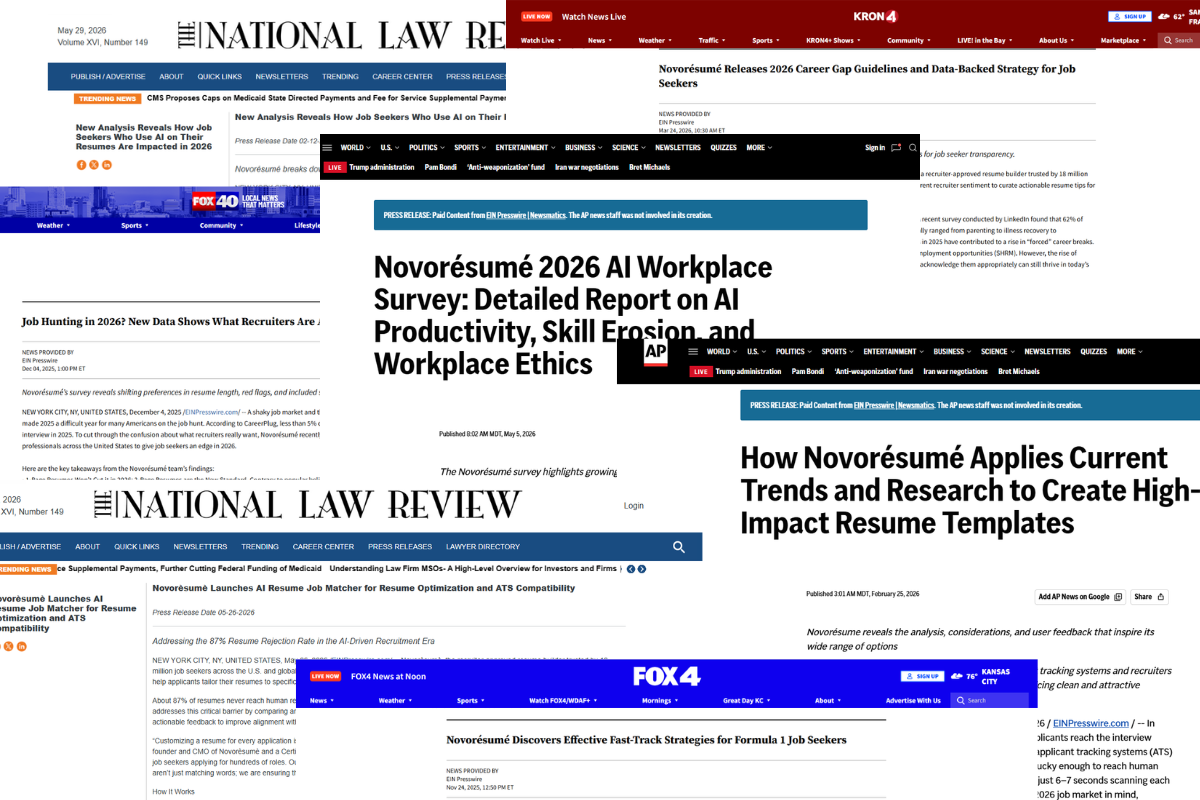
Release One was actively pitched to reporters and media outlets. It was traditional outreach, with journalists in mind. This maintained relationships and kept Novorésumé visible in conventional media. It was also optimized for GEO and distributed through EIN Presswire (a paid distribution service we use to get content syndicated across networks).
Release Two was GEO-optimized and distributed through EIN Presswire.
Two GEO-optimized press releases to feed LLMs with controlled content.
But here’s the secret sauce: The content didn’t stop there. The press releases often drew from Andrei’s blog and LinkedIn posts. Same information, different channels, repeated across multiple touchpoints. This multi-channel approach became the backbone of our digital PR strategy for the project.
The thinking was simple: if AI sees the same information show up in multiple places from credible sources, it starts to trust it and surface it when people ask questions. This is how you build a real AI visibility strategy—not through a single channel, but through coordinated, reinforced messaging.
The topics we chose were timely and specific. Each one was data-driven, useful, and designed to answer real questions people were actually asking.
The Proof: May Changed Everything
By May, something shifted.
We had released a press release on how hiring difficulty varies by location in early May, and we started running searches to see how AI was surfacing the content. We tested different queries across ChatGPT, Gemini, and Claude to see what AI was actually surfacing and how it was prioritizing information. What we found was encouraging.
-
ChatGPT: When searching for information about difficult cities for job hunting in 2026, Novorésumé’s blog appeared as the top source, with the EIN Presswire press release ranking as the #2 source.
-
Gemini: Novorésumé’s blog appeared in the top four sources for a similar query. The EIN Presswire press release was the 5th source cited.
-
Claude: The National Law Review’s publication of the press release accounted for the first two sources, with Novorésumé’s blog listed as the 5th.
But here’s where things got really interesting: We started seeing genuine earned media pickups—the kind you can’t pay for, where journalists independently discovered our research and decided to use it.
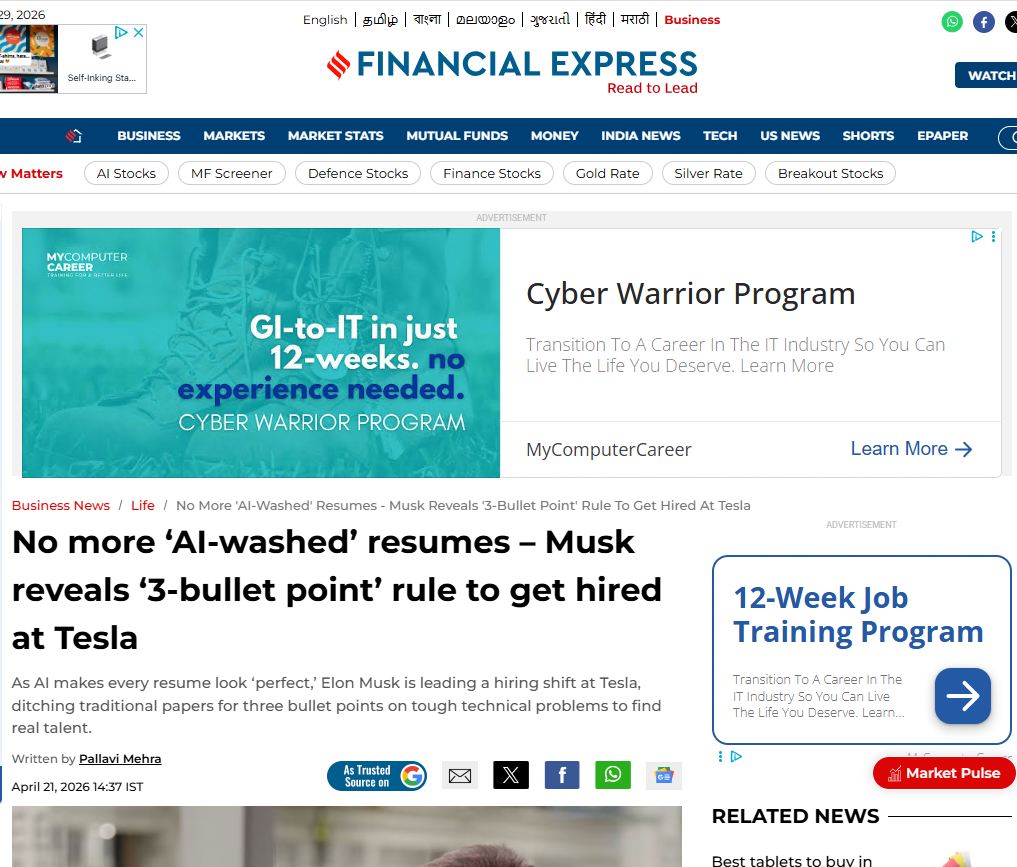
Financial Express published an article on April 21st that utilized data from our AI in the workplace survey. We’re uncertain whether she found the data through the press release or the blog article, but it was a significant mention from a high-authority publication.
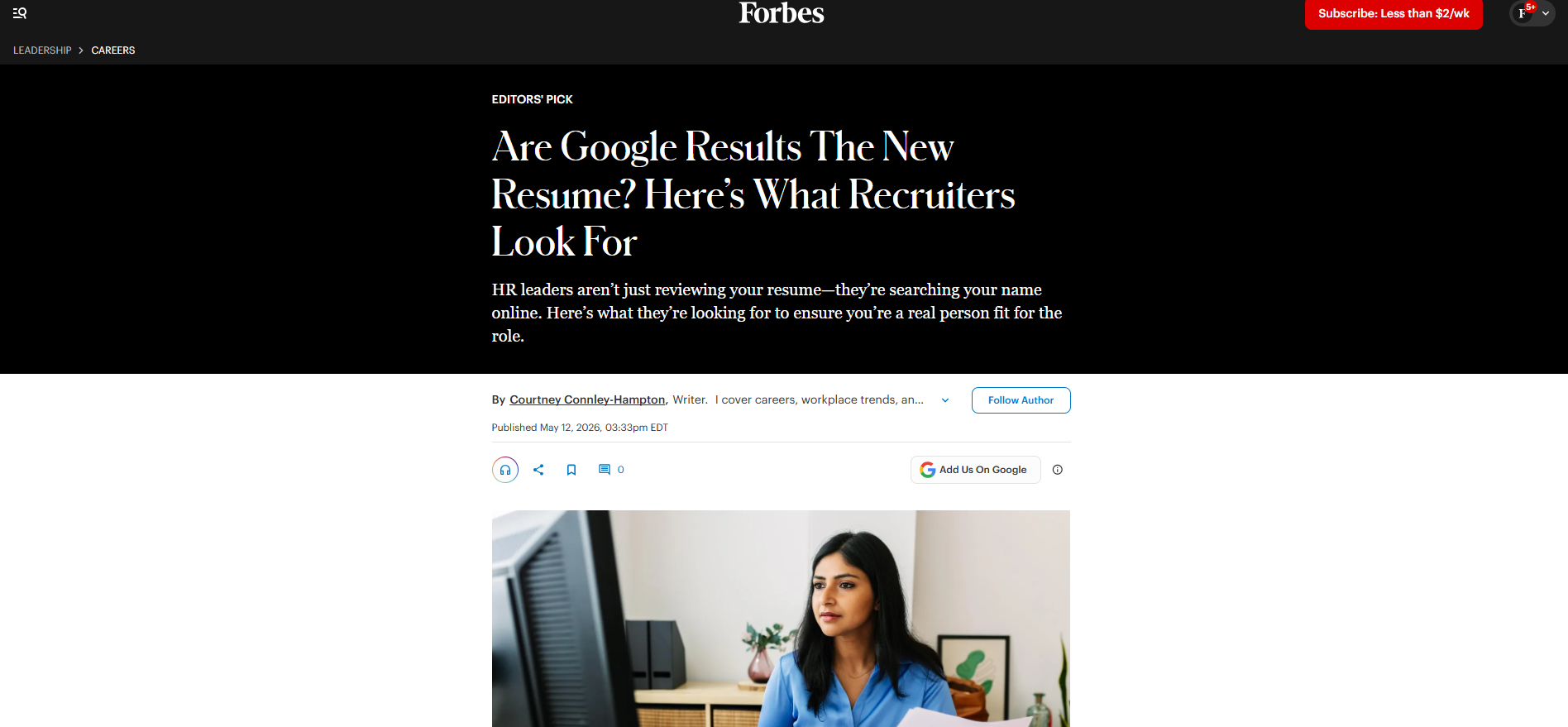
Forbes featured data from our January press release in an article published on May 12th. The article included a link to the press release as picked up by the Herald News, suggesting the reporter may have encountered it through their own research or media monitoring.
These earned media wins proved something important: our research was credible and useful enough that journalists were actively seeking it out and citing it in their coverage. That’s the validation you can’t manufacture.
Now, here’s the transparency piece: Both of our GEO-optimized releases were distributed through EIN Presswire, a paid service. We pay them to syndicate content across their network. That’s not organic earned media. It’s a tool in our toolkit, similar to paid distribution. But what we learned is that this tool, combined with our AI visibility strategy across multiple channels, actually works. The content got indexed. It got seen. And when paired with genuine earned media pickups and Andrei’s owned channels, it created a credible information ecosystem that both AI and journalists respect.
What We Actually Learned about GEO Press Releases
This project taught me something bigger than just “how to build an AI visibility strategy.” It taught me about the power of coordinated messaging across channels. When you have credible information and you distribute it thoughtfully through multiple authoritative sources—some owned, some earned, some paid—something clicks. Both AI and humans respect it more.
It also taught me the value of working with clients who are willing to experiment. Andrei could have demanded immediate results. Instead, he knew that understanding how AI search is changing PR meant being uncomfortable, iterating, and trusting the process even when we were learning on the fly.
The Takeaway
We started this project knowing very little about GEO press releases. We’re still learning, but the results we’re seeing are evidence that the approach is working.
If you’re a business watching your visibility decline because of algorithm changes or AI shifts—whether you’re in financial services sharing research and insights, public health publishing important data, or any company with a compelling story to tell—don’t assume the old playbook will save you. The answer isn’t always to do PR better. Sometimes it’s to do PR differently—by understanding how AI search is changing PR and building a digital PR strategy that speaks to both humans and algorithms.
But here’s what we’re not abandoning: journalists and earned media are still essential. The Forbes and Financial Express pickups proved that reporters actively seek out quality research and information, regardless of industry. Our traditional media pitching didn’t stop just because we started thinking about AI. In fact, the best results came from doing both—building visibility for AI while maintaining relationships with journalists who value credible sources.
The future of visibility isn’t gatekept by journalists alone, and it’s not completely controlled by AI either. It’s a combination. The organizations winning right now? They’re the ones doing both. Building visibility for AI and maintaining relationships with journalists who actually care about good research. Whether they’re facing algorithm shifts, fighting bias in search results, or just trying to be found by the right audience—the organizations that figure out how to speak to both systems are the ones that succeed.
We’re still figuring this out, but the early evidence is encouraging. And honestly? That’s exactly the kind of challenge we want to be solving.