In May, we asked ChatGPT, Claude, Gemini, and Google’s AI snippets 17 questions that NestSTEPS’ buyers are likely to ask an LLM: What are housing benefits for employees? How do housing benefits impact retention? What are unique financial wellness benefits beyond standard retirement plans?
We asked these questions in an incognito window and NestSTEPS did not appear in any of them across 68 chances.
Not only did it have 0 mentions, we also asked the engines to compare NestSTEPS to a competitor, which is the one question where you hand the model the name and it should be impossible to get wrong. Google confused them with an unrelated field-service software company called Next Steps and explained that the two businesses do not compete (doi!) They mentioned the wrong company completely.
Ten weeks later we ran the same 17 questions through the same LLMs. NestSTEPS appeared in 8.8 percent of the answers, and was named first when someone asked which vendors to consider. We also didn’t have any confusion with Next Steps like the first round!
Here is what happened in between.

[SCREENSHOT 1: the AI bot traffic chart filtered to OpenAI user bot, flat through June and July, spiking the week of August 7. Caption: retrieval traffic to neststepsbenefits.com, last 90 days.]
Who NestSTEPS is
NestSTEPS is a Utah-based startup solving the housing crisis by involving employers. Their argument is that employers are already in the business of helping people build long-term financial security through the 401(k), and that homeownership is just as demanded and important. Makes so much sense right? We think so too!
Their product has three layers targeted to make it easy for an employer to say yes.
The first is a home savings plan, an automated savings system that holds employee contributions in a separate FDIC-insured account earmarked for a home purchase.
The second is the employer contribution. Companies decide how much they put in, who qualifies, when it vests, and whether the money goes toward buying a home or paying down an existing mortgage. That flexibility is what benefits leaders respond to, because it lets a 200-person company and a 5,000-person company build customizable benefit options for their employees.
The third is education and guidance. Saving is almost always a behavioral problem. Buying a house when you haven’t ever bought one before has a learning curve to it. This education course covers both financial knowledge and home-buying processes and sets up the employees for success and empowerment.
Why doesn’t ChatGPT mention my company?
Because nothing is pointing at you, and often because there is nothing to point at.
AI answer engines do not rank pages the way search does. They select a few sources they trust enough to repeat, synthesize them, and return an answer that already contains a verdict. If your name is not in the sources, you are not in the answer, and your buyer never knows you exist.
So we built a strategy to show up in the sources LLMs cite frequently in the category
- First, NestSTEPS commissioned original research, a 2026 survey of 1,000 full-time U.S. workers on workforce housing and financial wellbeing. We reviewed the question set and pushed for primary data over borrowed statistics.
- We published the results on their own site, with the key stats written out under question-shaped headers that would answer commonly asked questions about homeownership as a benefit.
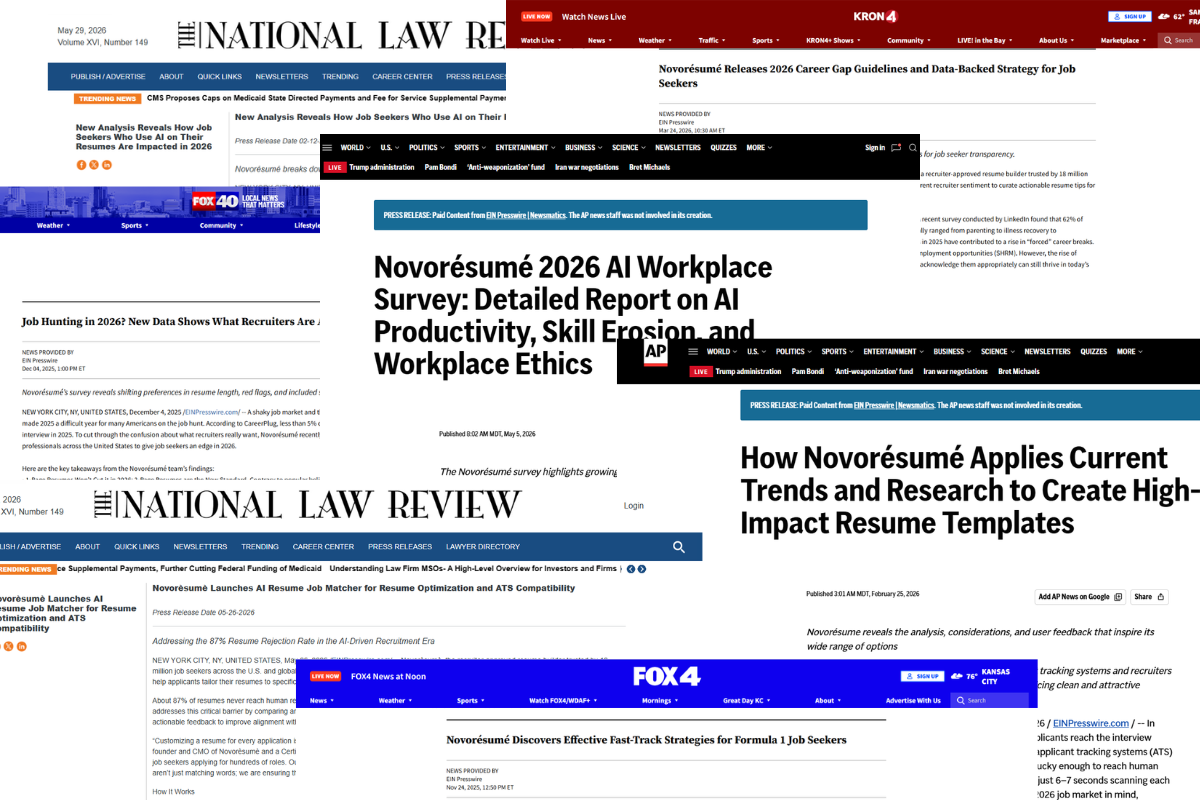
- We wrote and distributed the GEO-focused press releases. The June and July announcements went out on the wire, including the Row Partners partnership, and were syndicated to news sites.
- We pitched the research to trade press. Employee Benefit News ran a feature on homeownership benefits as a retention tool on August 3, built partly on the NestSTEPS survey data.
Does earned media actually get cited in AI answers?
Yes, though not the way we assumed.
When we re-ran the questions in August, the EBN article showed up as a cited source in Claude and in Google’s AI snippets. Claude specifically identified the August 3 piece as a primary source.
In ChatGPT it never appeared in the source list at all. What appeared instead was neststepsbenefits.com, cited for the survey data.
Image 2: the ChatGPT sources panel showing Foyer, NestSTEPS, EIN Presswire, Benefit News, and Reddit. Caption: five sources, three of them from our efforts

Interestingly Muck Rack’s Generative Pulse study found that wire syndication accounts for roughly 1.1 percent of AI citations while earned media accounts for about 84 percent. So we found it surprising that the wire release got cited too, by Google, through a syndicated version on a Gannett newspaper site.

The resources that were cited differently in each LLM were layering and compounding and serving different purposes. If a model needed the data from the survey, it went to the client’s site, because the client ran the survey. If it needed proof that employer-sponsored homeownership is a credible category and not one startup’s idea, it went to EBN. If it needed to know who NestSTEPS had partnered with and when, it went to the press release.
AI retrieval hits to the NestSTEPS site were essentially flat through June and most of July, then jumped to more than 400 in a single day the week after the EBN article ran. We cannot pin that spike on any one input. What we can say is that the spike happened once all four strategies were published. Four days after a trade publication puts the client’s research in front of the people who buy this category is reasonable timing for the demand to increase.

[DIAGRAM: the citation architecture graphic showing EIN Presswire, the NestSTEPS PR page, the EBN article, and Reddit threads all carrying the survey figure and resolving to the NestSTEPS report page.]
What changed
Seventeen unbranded questions across four engines gives 68 places NestSTEPS could have appeared.
In May and June, NestSTEPS didn’t appear in any answers.
In August, they appeared in six. That is 8.8 percent of possible answers. Three of the six were organic and three we requested that they cite sources and were able to find what data it was citing.

The most exciting part of the experiment is that we asked who provides employer-sponsored homeownership benefits, and asked for the best homeownership benefit vendors for a 500-person company, ChatGPT named NestSTEPS first in both. We added those questions in August, and will track them closely.


[SCREENSHOT 3: the ChatGPT vendor shortlist naming NestSTEPS first, with the “my first call for a retention strategy” line visible.]
And the comparison question that produced the field-service software mix-up in May came back correct in August across all four surfaces, including Google.
The Structure of a Press Release Matters for AI
Look at how the NestSTEPS press release is built. The survey findings sit in an FAQ block, directly under headers phrased as questions. Some PR pros are calling this format an AI notice that makes it easy for AI bots to crawl and synthesize information.
FAQ
How do I know if my brand appears in AI answers? Write 15 to 20 questions a buyer would actually type. Run them through ChatGPT, Claude, and Gemini. Record whether you appear and who appears instead. Do it before you start any campaign, then re-run the identical questions after.
Does a press release help with AI visibility? Aggregate studies put wire syndication at a tiny share of AI citations. In our sample it still produced one, through a syndicated version on a news site. Treat the wire as a way to get facts indexed and findable rather than as a citation strategy on its own.
Should we publish original research to get cited by AI? If you can afford it, yes. Owning a statistic makes you the only possible primary source for it, so every path that leads to that number eventually leads back to you.
How many placements does it take to change an AI answer? We do not know, and anyone who gives you a number is guessing. What we saw was movement after four coordinated inputs over roughly ten weeks.
What is the difference between being mentioned and being cited? A mention is your name in the text. A citation is your name in the source list, usually with a link. Mentions are good. Citations compound.
If you want to know what your buyers are hearing about you when they go looking, the answer is sitting in a chat window, and finding out takes an afternoon.